American elm
Ulmus americana · Ulmaceae · also White elm
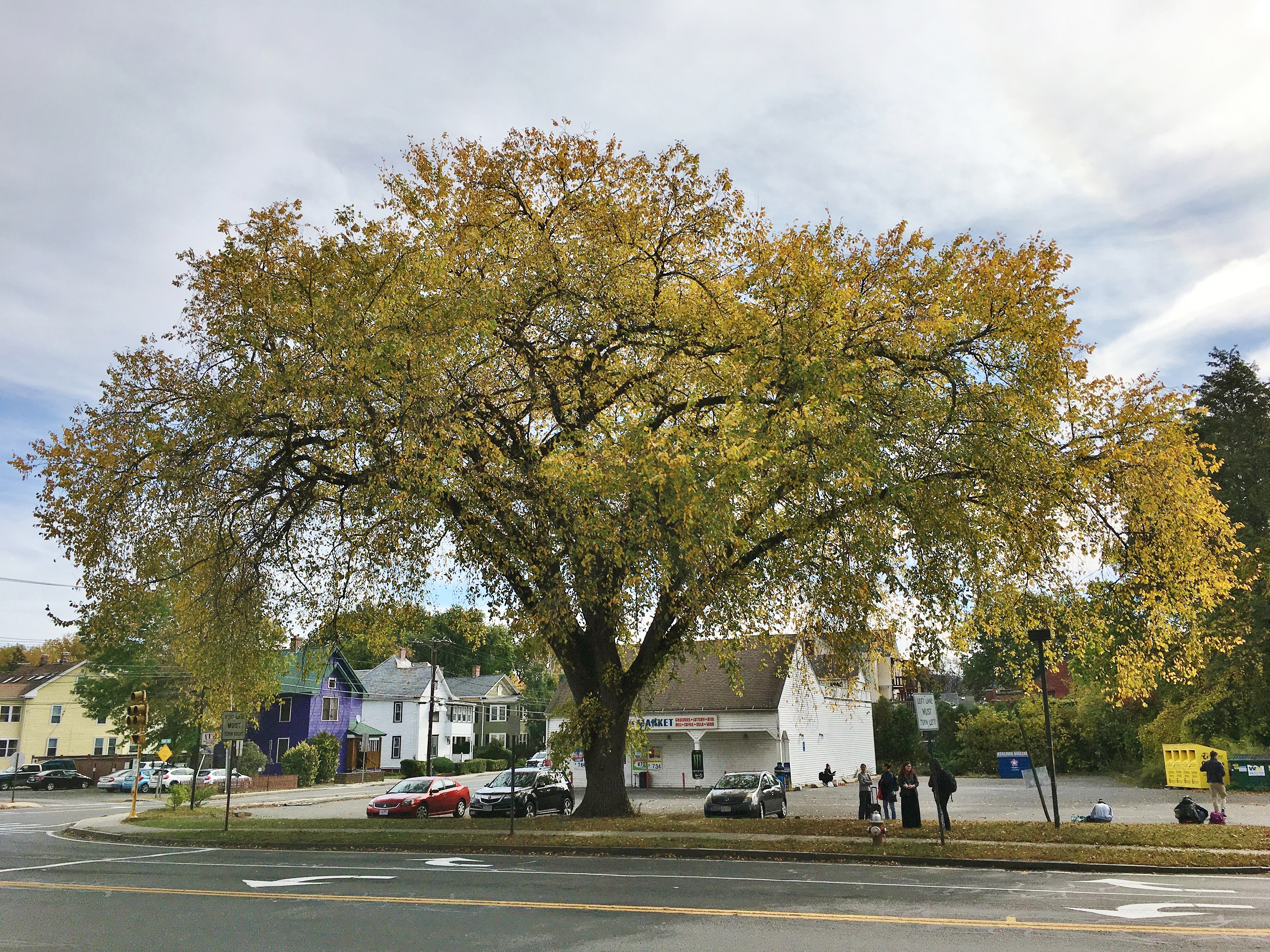
The great vase-shaped street tree of pre-1950s America, fast-growing to 60-80 feet with arching limbs and soft yellow fall color. Dutch elm disease killed most of the old ones; disease-resistant selections such as Princeton, Valley Forge and Jefferson have brought it back. In Central Texas it grows along creeks and bottomlands and is a good shade tree where it gets enough water.
Where it stands
Native
This tree evolved here, and local wildlife depends on it.
- 🇺🇸 United States · Also native across most of the eastern and central United States and southern Canada (USDA PLANTS distribution)source
- 🇺🇸 AL, United Statessource
- 🇺🇸 AR, United Statessource
- 🇺🇸 FL, United Statessource
- 🇺🇸 GA, United Statessource
- 🇺🇸 LA, United Statessource
- 🇺🇸 MS, United Statessource
- 🇺🇸 NC, United Statessource
- 🇺🇸 OK, United Statessource
- 🇺🇸 SC, United Statessource
- 🇺🇸 TN, United Statessource
- 🇺🇸 TX, United Statessource
Recommended
A city, utility or extension service lists it among the trees it approves for planting here.
- 🇨🇦 Calgary, AB, Canada · On the City of Calgary Top Tree Species for Calgary listsource
- 🇨🇦 Toronto, ON, Canada · On the City of Toronto Street Tree Planting Program brochure species listsource
- 🇺🇸 Denver, CO, United States · On the Denver Office of the City Forester Approved Street Tree Listsource
- 🇺🇸 Washington, DC, United States · On the Casey Trees Tree Rebate eligible species listsource
- 🇺🇸 Atlanta, GA, United States · On the Trees Atlanta Top 50 Atlanta Trees listsource
- 🇺🇸 Boston, MA, United States · On the City of Boston Urban Forestry Division recommended public street trees listsource
- 🇺🇸 Dallas, TX, United States · On the City of Dallas Article X Approved Tree Listsource
Care
Buy a Dutch-elm-disease-resistant cultivar. Water deeply and regularly the first two summers and in long droughts. Prune in winter to build strong branch structure. Watch for wilting, yellowing branches (a sign of Dutch elm disease) and for elm leaf beetles, scale and leaf miners. Avoid pruning in spring and early summer when bark beetles are active.
Benefits
Good for