Eastern white cedar
Thuja occidentalis · Cupressaceae · also Northern white-cedar, Eastern arborvitae, Arborvitae
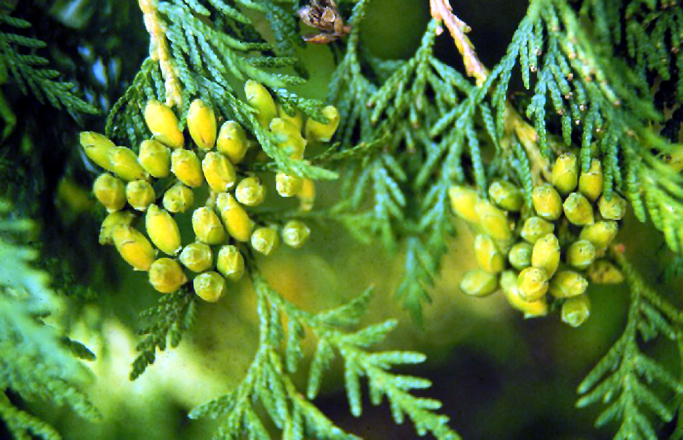
A dense, narrow, pyramidal evergreen with flat fan-like sprays of scale leaves, tiny cones and stringy reddish bark. It is the default hedge, screen and windbreak conifer across Canada and the northern states, with hundreds of cultivars from tight globes to narrow columns such as 'Smaragd' (Emerald Green), 'Techny' and 'Brandon'. Deer strip it in winter and heavy snow can split multi-stemmed plants; Ontario notes it does not tolerate road salt.
Where it stands
Native
This tree evolved here, and local wildlife depends on it.
- 🇨🇦 Canada · Native from southeastern Manitoba through Ontario and Quebec to New Brunswick, Nova Scotia and Prince Edward Island; grows throughout Ontario.source
- 🇺🇸 United States · Native from Minnesota to Maine with scattered populations in the Appalachians south to Tennessee and North Carolina (more than 15 states).source
Care
Water regularly for the first two summers and in drought, and shelter from strong winter wind to limit browning. Shear hedges in early summer; tie up or knock snow off columnar forms. Protect from deer with fencing or repellents. Bagworm, arborvitae leafminer, spider mites and occasional cankers are the main problems.
Benefits
Good for