Callery pear
Pyrus calleryana · Rosaceae · also Bradford pear, Ornamental pear
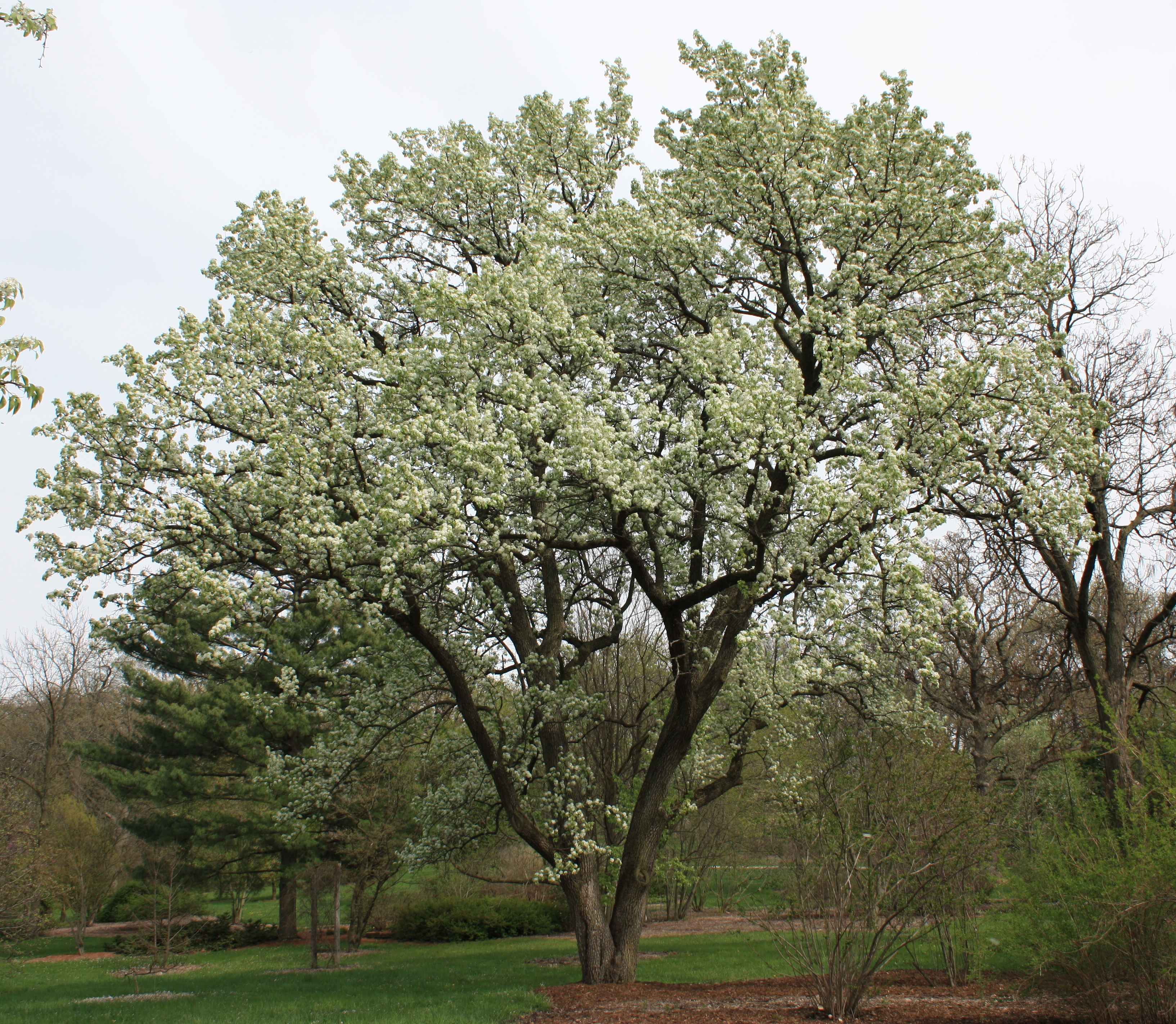
The ubiquitous white-flowering street tree of the 1980s and 1990s (30-50 feet), pyramidal with glossy leaves that turn purple-red in fall. Its flowers smell of rotting fish, its tight branch crotches split apart in wind and ice after 15-20 years, and the once-sterile Bradford now cross-pollinates with other cultivars to produce thorny wild seedlings that form dense thickets along roadsides and fields, including throughout Texas.
Where it stands
Native
- 🇨🇳 China · Native to China and Vietnam
Care
Not recommended for new planting; several states have banned its sale. If you have one, expect limb failure and fire blight and plan a replacement. Remove wild seedlings (which carry thorns) by cutting and treating stumps, since cut trees resprout. Native alternatives with spring bloom include Mexican plum, Texas redbud and rusty blackhaw viburnum.
Benefits
Good for