Cherry laurel
Prunus laurocerasus · Rosaceae · also Common laurel, English laurel
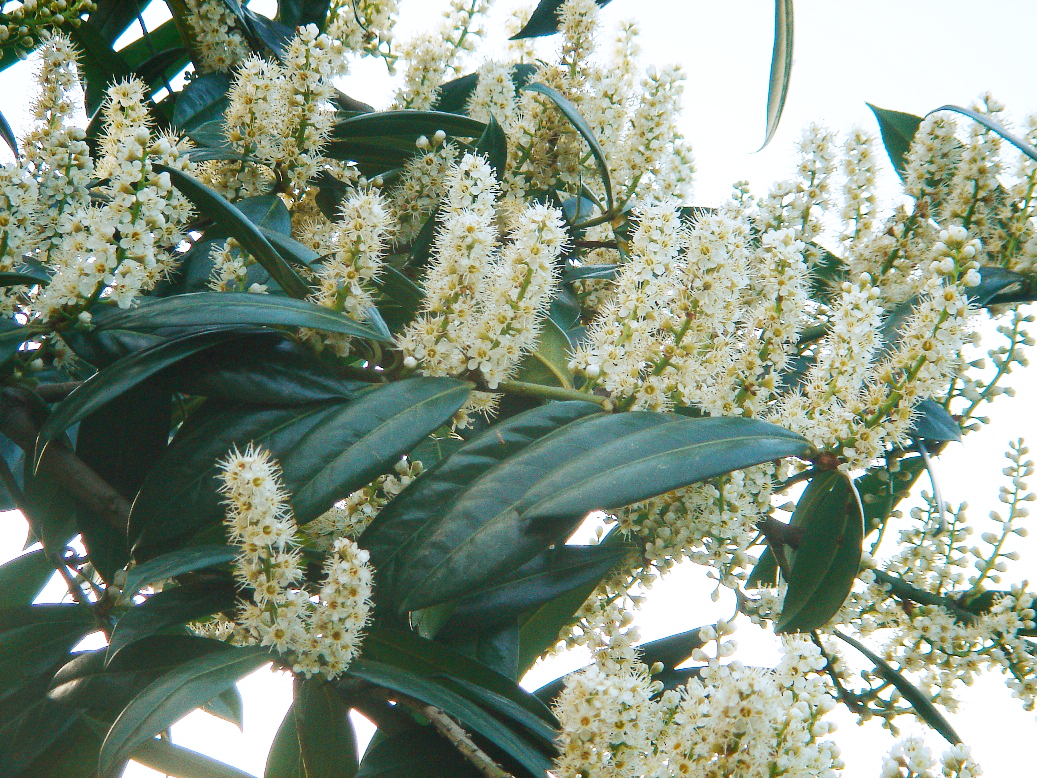
A dense evergreen shrub or small tree, usually 3 to 6 m, with large glossy leaves, white flower spikes and black cherries that birds carry into woodland. It is the most common hedging plant sold in Britain and Ireland, but it escapes into woods where its shade stops native trees regenerating. All parts contain cyanogenic compounds; wilting clippings are especially toxic to livestock and pets.
Where it stands
Care
If you must plant it, keep it as a clipped hedge and trim with secateurs in late spring to avoid cut leaves browning; remove berries before birds spread them. Established escapes need cutting and stump treatment because it resprouts and layers. Shot-hole, powdery mildew and root rot are the main problems. Consider native holly, yew or hornbeam instead.
Benefits
Good for