Chinese pistache
Pistacia chinensis · Anacardiaceae · also Chinese pistachio
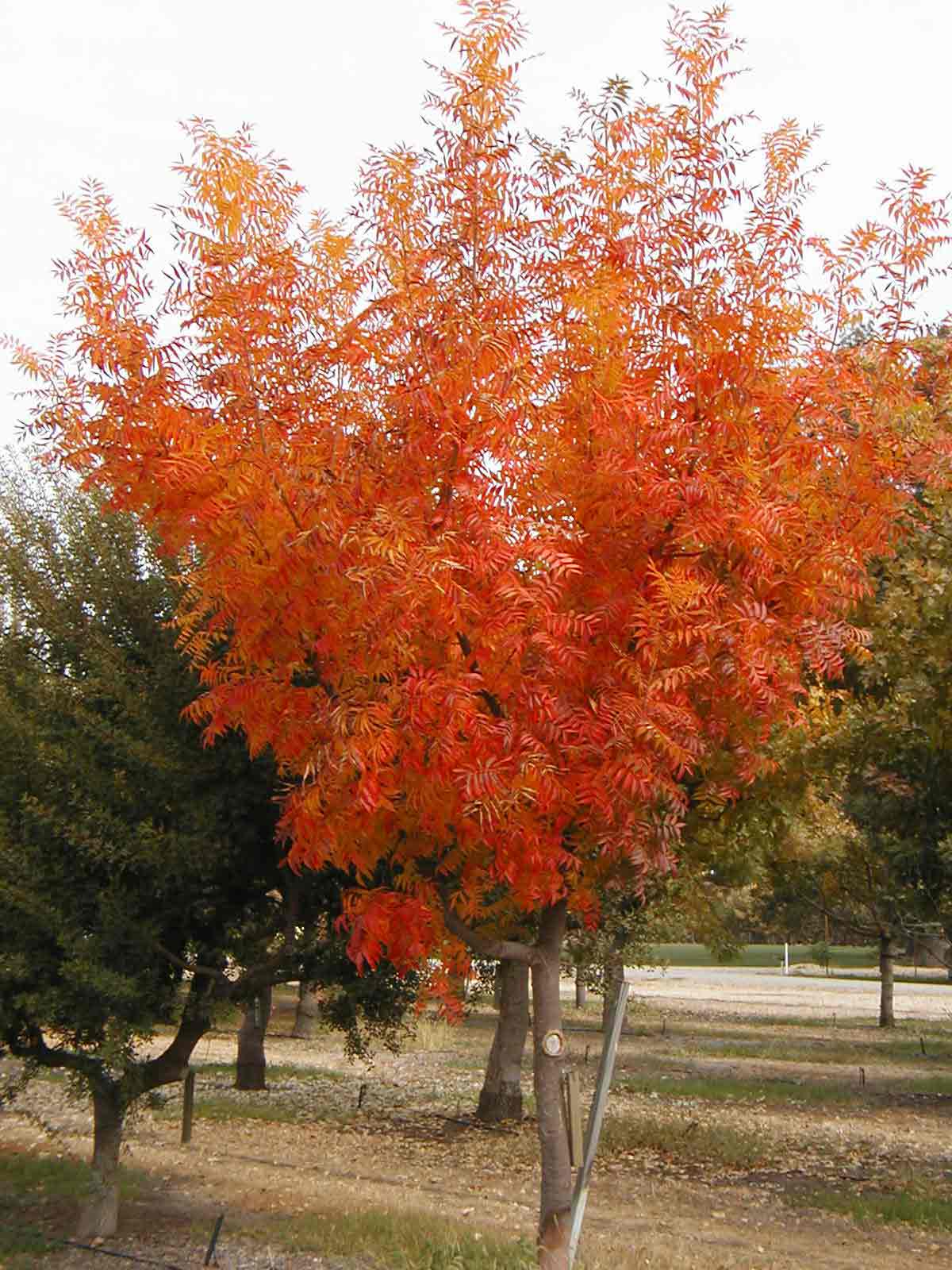
A tough, heat- and drought-proof shade tree (30-35 feet) with fine compound leaves that turn fiery orange and red in fall even in Texas, which made it a nursery favorite and a common Austin street tree. Female trees bear clusters of red berries that birds spread, and it is now invading ranchland, woodlands and creek corridors in Central Texas. It is listed in the Texas Invasives database but not by the Texas Department of Agriculture or the City of Austin.
Where it stands
Native
- 🇨🇳 China · Native to China and East Asia
Care
If you plant it, choose a male, fruitless cultivar such as Keith Davey so it cannot seed into natural areas, and stake and prune young trees, which are awkward and lopsided for several years. Water the first two summers, then it needs little. Few pests; verticillium wilt is a rare problem. Many Texas native plant groups now recommend against it; Texas red oak, Lacey oak and cedar elm give fall color without the risk.
Benefits
Good for