White spruce
Picea glauca · Pinaceae · also Canadian spruce, Black Hills spruce
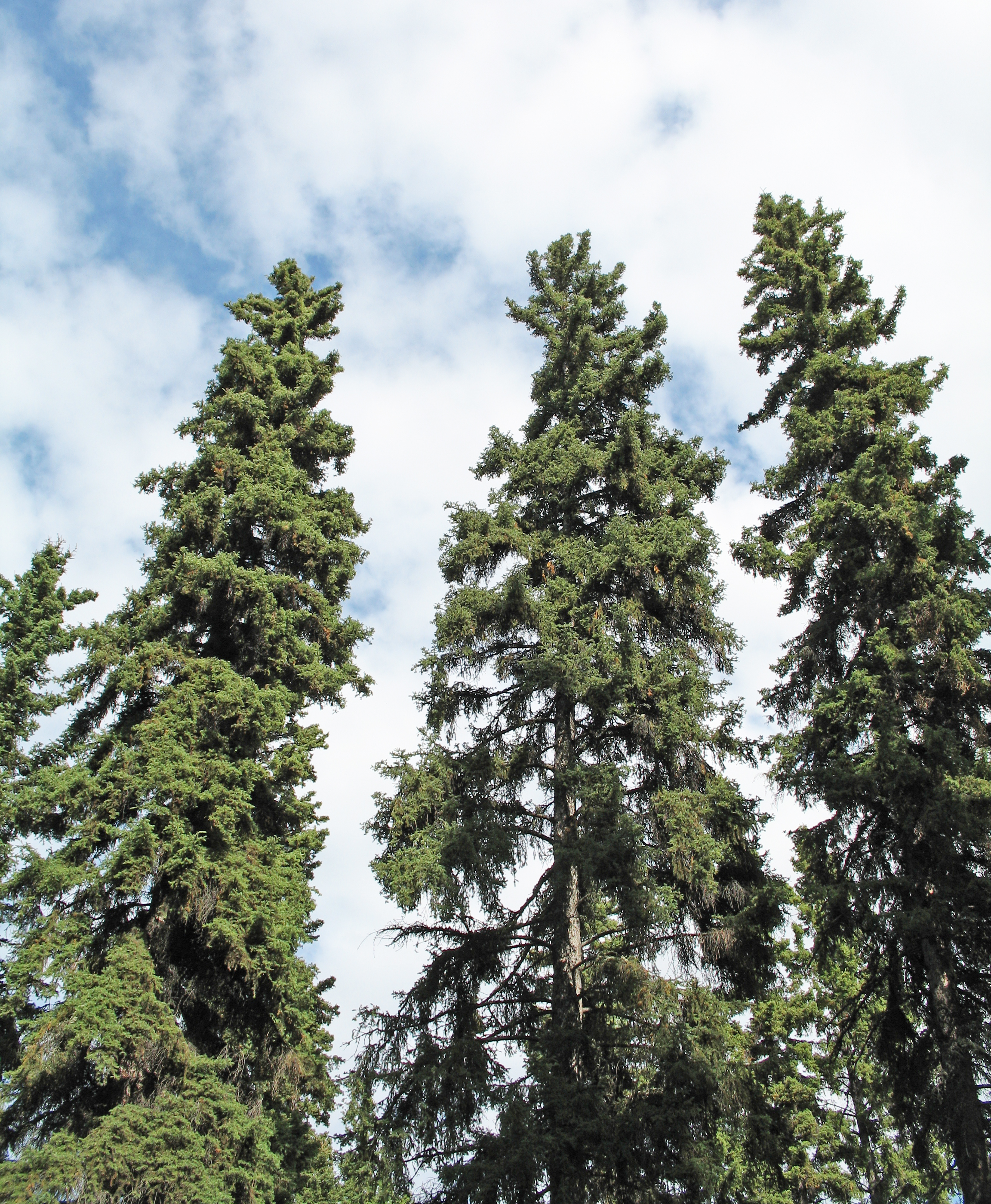
A dense, narrow, symmetrical spruce with stiff pale to blue-green needles that smell skunky when crushed and slender hanging cones. It is among the hardiest and most wind-, cold- and drought-tolerant conifers, the backbone of prairie shelterbelts and the provincial tree of Manitoba. Black Hills spruce (var. densata) and dwarf Alberta spruce 'Conica' are compact forms for smaller lots.
Where it stands
Native
- 🇨🇦 Canada · Native in every Canadian province and territory; provincial tree of Manitoba.source
- 🇺🇸 AK, United Statessource
- 🇺🇸 ME, United Statessource
- 🇺🇸 MI, United Statessource
- 🇺🇸 MN, United Statessource
- 🇺🇸 MT, United Statessource
- 🇺🇸 ND, United Statessource
- 🇺🇸 NH, United Statessource
- 🇺🇸 NY, United Statessource
- 🇺🇸 SD, United States · Isolated Black Hills population (Black Hills spruce); state tree of South Dakota.source
- 🇺🇸 VT, United Statessource
- 🇺🇸 WI, United Statessource
- 🇺🇸 WY, United States · Black Hills population.source
Care
Plant in full sun with good drainage and mulch its shallow roots; water through establishment and in prolonged drought. It needs little pruning. Spruce spider mite, spruce budworm, yellow-headed sawfly, gall adelgids and needle cast are the usual problems; it struggles in hot, humid climates.
Benefits
Good for