Japanese privet
Ligustrum japonicum · Oleaceae · also Japanese ligustrum, Waxleaf ligustrum, Wax-leaf privet
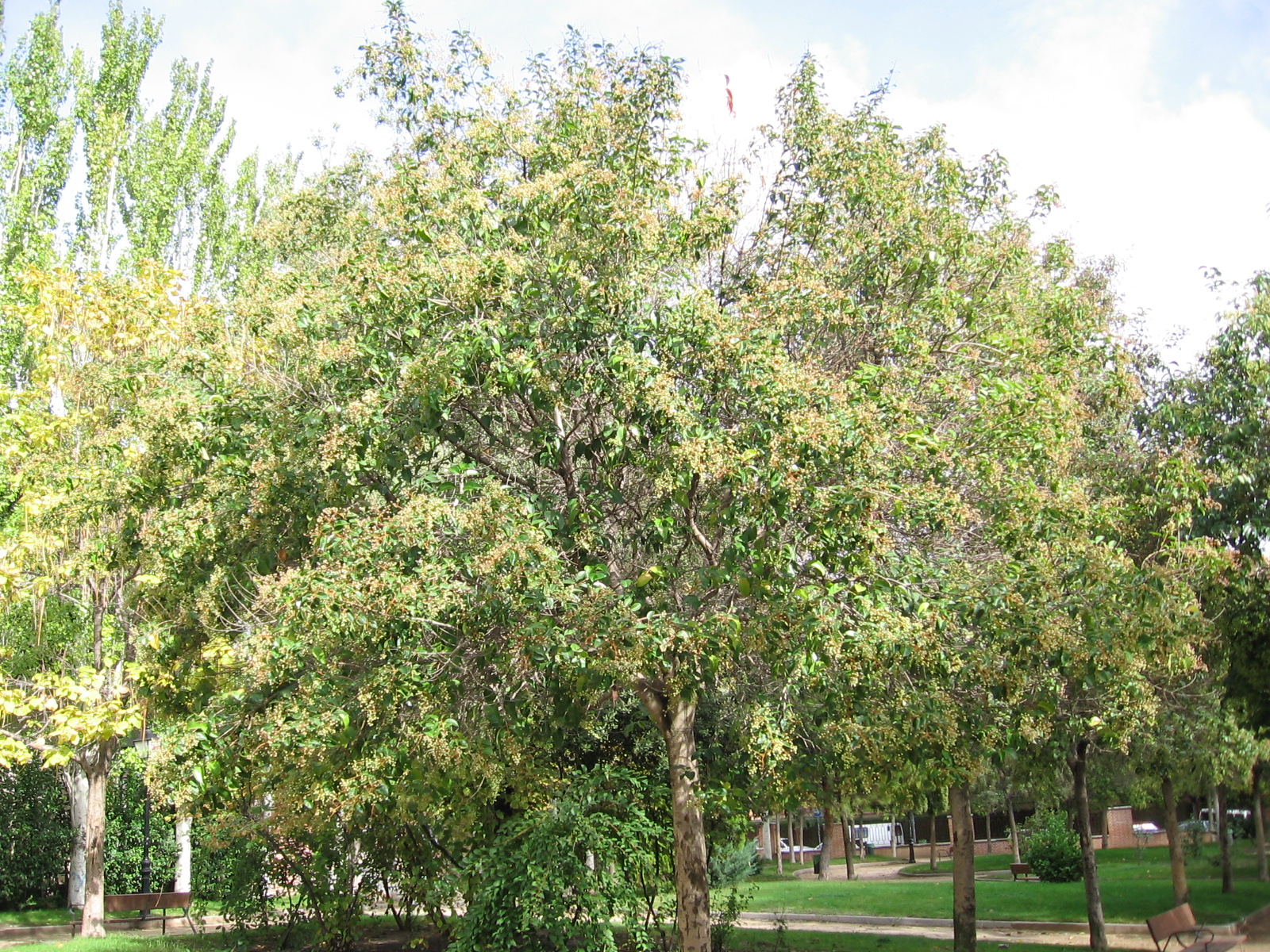
The common waxleaf hedge shrub of Texas subdivisions, a dense evergreen 6-12 feet tall (to 20 as a small tree) with thick glossy leaves, cream flowers in late spring and blue-black berries. Birds spread the seed into woodlands and creek corridors, where it joins glossy privet in forming shady thickets. Fruit and leaves are poisonous and the flowers have a smell many find offensive.
Where it stands
Native
- 🇯🇵 Japan · Native to Japan and Korea
Care
Not recommended for new planting in Texas; several privet species are listed as invasive. If you keep an existing hedge, shear after flowering so berries never form. Remove unwanted plants by cutting and treating the stump; seedlings pull easily when small. Yaupon holly or dwarf yaupon makes a native evergreen hedge of similar size.
Benefits
Good for