Black walnut
Juglans nigra · Juglandaceae · also Eastern black walnut
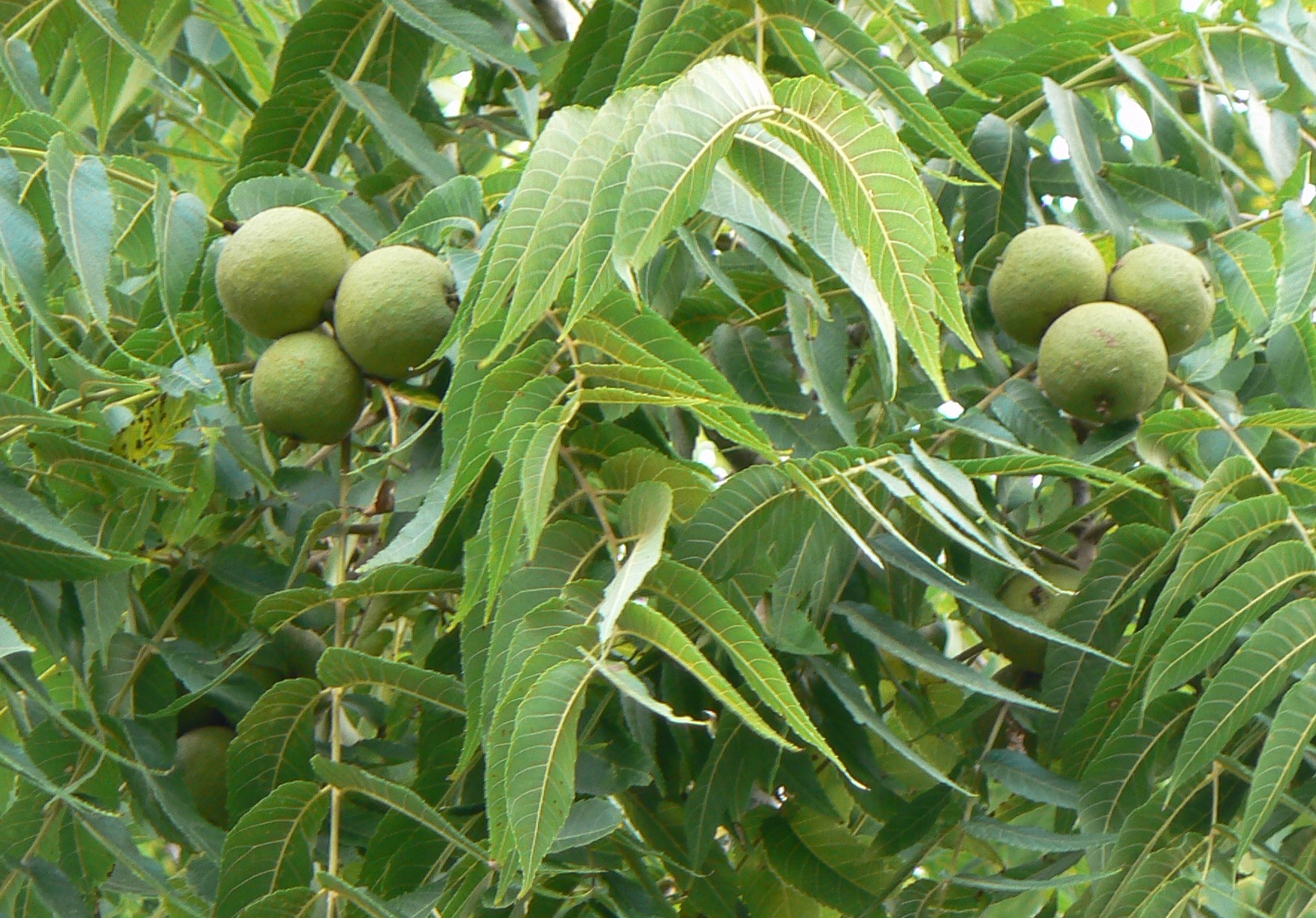
A large, valuable timber and nut tree (50-75 feet) with long feathery leaves that turn clear yellow and hard-shelled nuts in green husks that stain everything they touch. Its roots and leaves release juglone, which kills tomatoes, apples and many ornamentals planted beneath it. Best on big rural or riparian lots with deep soil.
Broadleaf, drops leavesMedium growthFull sunModerate water
Where it stands
Native
- 🇺🇸 United States · Also native in: CT, DC, DE, IA, IL, IN, KS, KY, MA, MD, ME, MI, MN, MO, NE, NH, NJ, NY, OH, PA, RI, SD, VA, WI, WV (USDA PLANTS distribution)source
- 🇺🇸 AL, United Statessource
- 🇺🇸 AR, United Statessource
- 🇺🇸 FL, United Statessource
- 🇺🇸 GA, United Statessource
- 🇺🇸 LA, United Statessource
- 🇺🇸 MS, United Statessource
- 🇺🇸 NC, United Statessource
- 🇺🇸 OK, United Statessource
- 🇺🇸 SC, United Statessource
- 🇺🇸 TN, United Statessource
- 🇺🇸 TX, United States · Native to the eastern half of Texas as far west as the Edwards Plateau; Austin's Grow Green list carries the smaller native little walnut (Juglans microcarpa) insteadsource
Care
Plant small; the taproot makes transplanting hard. Keep soil moist the first two years. Do not plant vegetable gardens or sensitive ornamentals within the drip line. Expect fall webworm and caterpillars, anthracnose in wet years, and a heavy nut drop in autumn that is hard on mowers and ankles. Prune in late winter.
Benefits
ShadeEdibleWildlifeBirdsFall colorLong lived
Good for
TimberFoodYard shadeparksAgroforestry