Grey mangrove
Avicennia marina · Acanthaceae · also White mangrove, Mānawa, Manawa
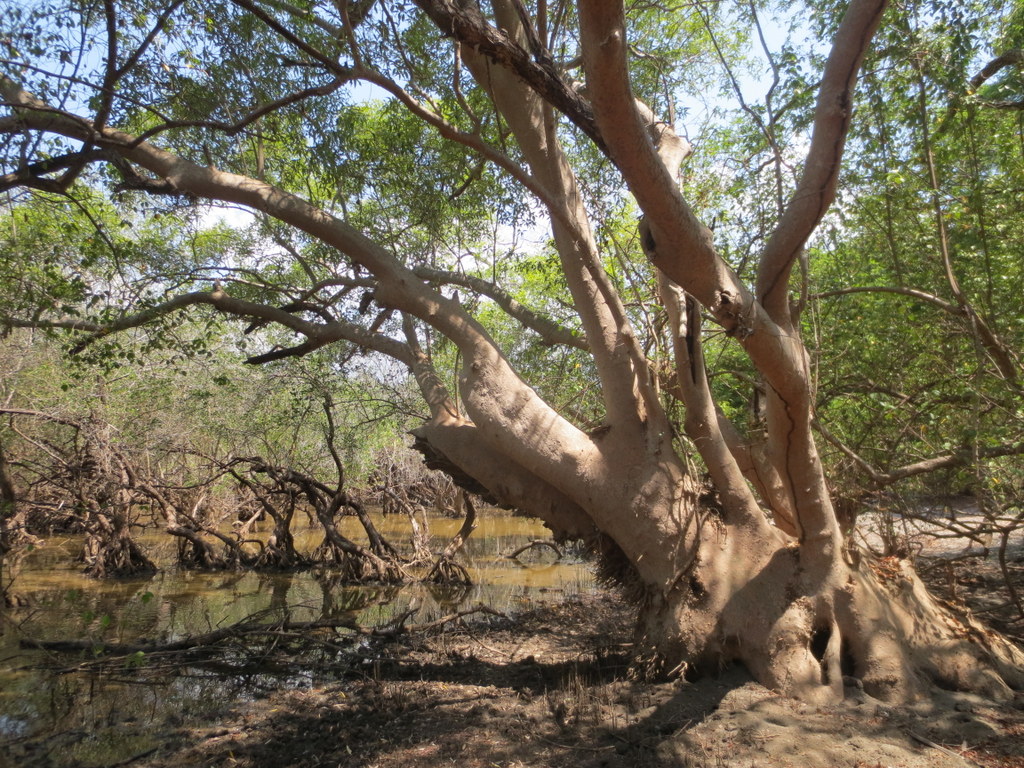
The world's most widespread and most cold-tolerant mangrove, a shrub or small tree of 2 to 12 m with grey-backed leathery leaves and carpets of pencil-like breathing roots (pneumatophores) rising from the mud. It is the only mangrove in New Zealand and the commonest in New South Wales, and it stabilises shorelines and nurses fish from Kenya to Victoria. It is planted in mangrove restoration across Africa, the Gulf and Asia; in some New Zealand harbours it is spreading onto sediment-choked flats and is locally cleared.
Where it stands
Native
- 🇦🇪 United Arab Emiratessource
- 🇦🇺 NSW, Australia · Most common and widespread mangrove in NSWsource
- 🇦🇺 NT, Australiasource
- 🇦🇺 QLD, Australiasource
- 🇦🇺 SA, Australiasource
- 🇦🇺 VIC, Australiasource
- 🇦🇺 WA, Australiasource
- 🇪🇬 Egypt · Red Seasource
- 🇮🇳 Indiasource
- 🇰🇪 Kenyasource
- 🇲🇿 Mozambiquesource
- 🇳🇿 New Zealand · Subsp. australasica, Parengarenga Harbour south to Kawhia and Ohiwa; spreading in some sediment-laden harbours and removed from sites where it was planted outside its rangesource
- 🇸🇦 Saudi Arabiasource
- 🇹🇿 Tanzaniasource
- 🇿🇦 South Africasource
Care
Plant ripe floating fruit or seedlings into mud at mid-tide level; it needs no care but is frost tender when young. Growth is slow. Do not plant outside its natural range (it has been deliberately spread in NZ) and check mangrove protection laws before clearing or planting.
Benefits
Good for