Baobab
Adansonia digitata · Malvaceae · also African baobab, Monkey bread tree
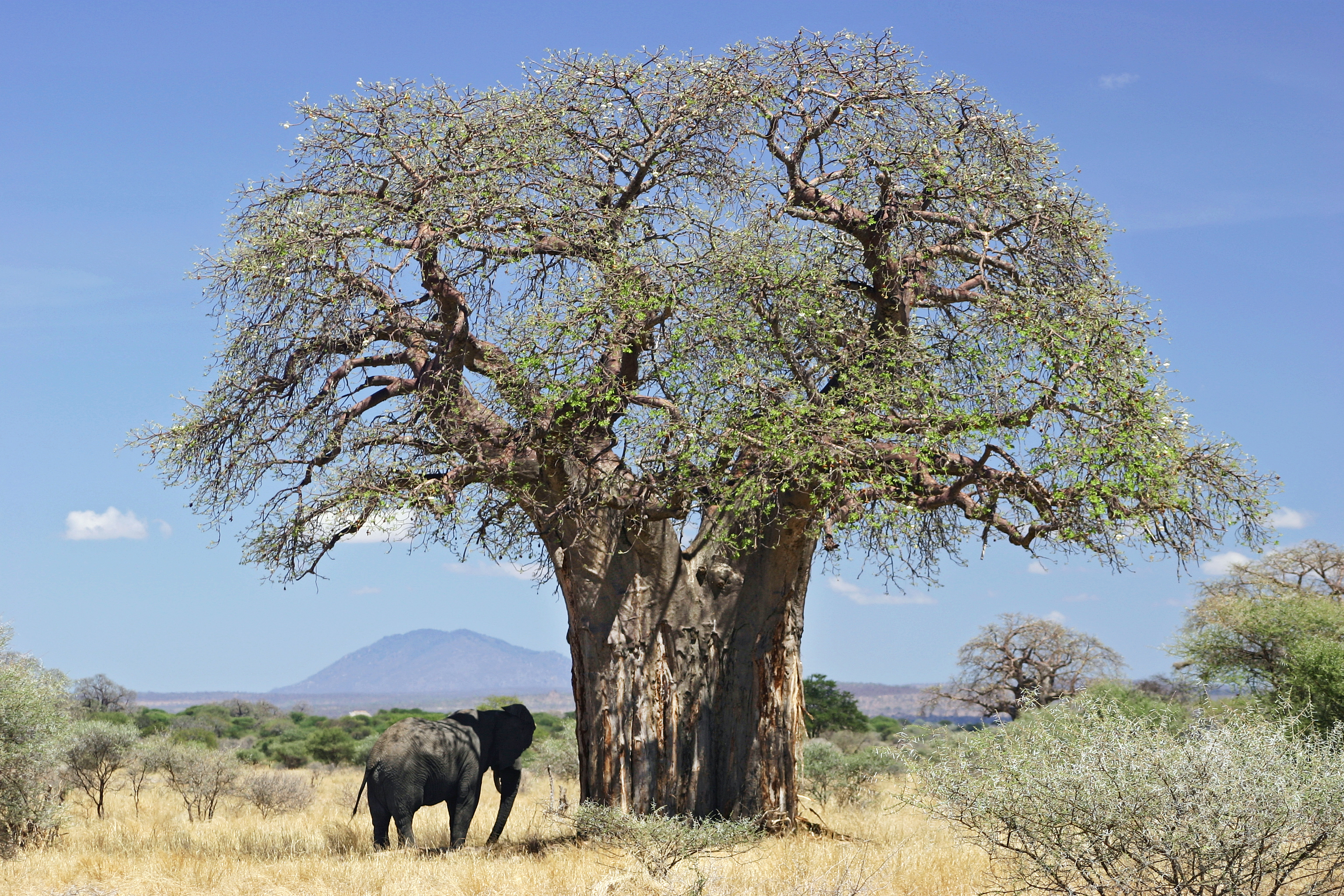
The unmistakable 'upside-down tree', 10 to 25 m tall with a swollen water-storing trunk that can reach 28 m in girth and live more than 1,000 years. Leafless most of the dry season, it bears large white bat-pollinated flowers and velvety fruit whose tart vitamin-C-rich pulp is a growing export. It is planted by communities and agroforestry programmes for food, fibre and shade, though it grows slowly after an initial burst.
Where it stands
Care
Sow or plant at the start of the rains in frost-free, well-drained ground; seedlings reach 2 m in two years and 7 m in ten, then slow down. Protect young trees from livestock and game. No pruning needed; it may be pollarded for leaves. Resistant to fire, termites and drought; elephants damage mature trunks. Keep well away from buildings because of its eventual size.
Benefits
Good for